Smart Thermostat Guide: Save Money on Heating and Cooling
Everything you need to know about smart thermostats for your Virginia home. Compare features, learn installation tips, and maximize your energy savings.
Why Smart Thermostats Are Worth the Investment
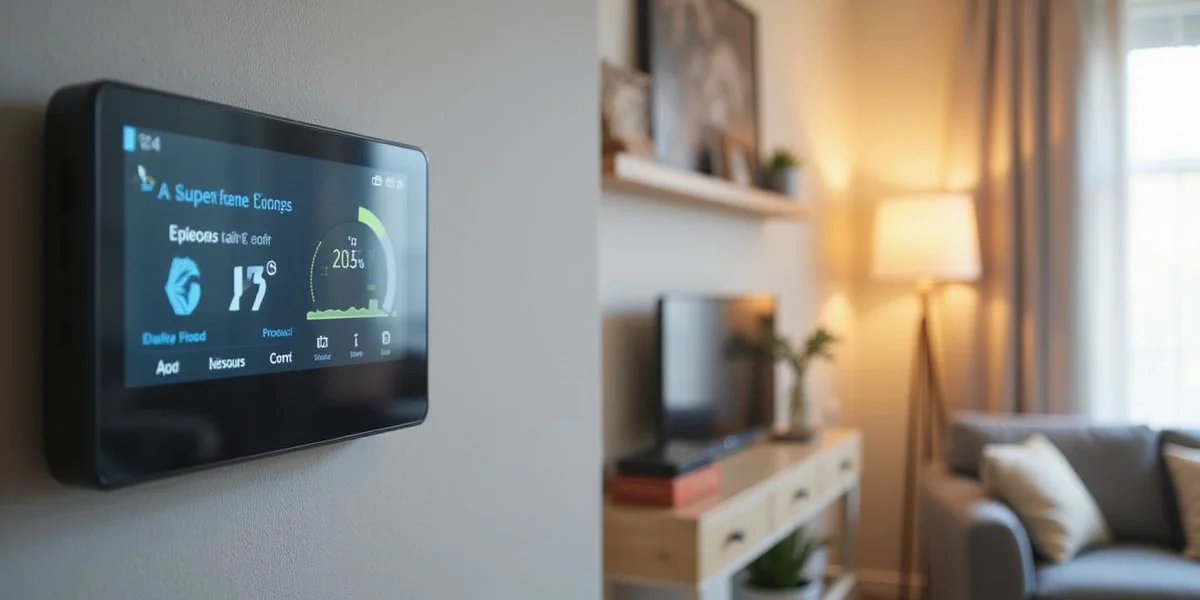
If you are still using a basic programmable thermostat or, worse, an old manual dial thermostat, you are likely spending more on heating and cooling than you need to. Smart thermostats have revolutionized home comfort management, and for Northern Virginia homeowners dealing with both hot summers and cold winters, they offer significant advantages.
At HVAC of Virginia, we have installed and configured hundreds of smart thermostats in Manassas-area homes. Here is everything you need to know about choosing, installing, and getting the most from this technology.
How Smart Thermostats Save Money
Smart thermostats save energy through several mechanisms that go beyond what a standard programmable thermostat can do.
Learning Algorithms The most advanced smart thermostats learn your daily patterns and preferences over time. They notice when you typically leave for work, when you come home, what temperatures you prefer at different times, and how long your home takes to heat up or cool down. After a week or two of observation, they create an optimized schedule automatically.
Occupancy Detection Using built-in sensors, geofencing through your smartphone, or both, smart thermostats detect when nobody is home and automatically adjust the temperature. If you leave for work early one day or come home late, the thermostat adapts without any manual input. This alone can save significant energy, since many homeowners forget to adjust their thermostats when their routines change.
Weather Integration Smart thermostats connect to the internet and factor in local weather forecasts. If a cold front is moving into the Manassas area, the thermostat can start heating earlier to maintain comfort without waiting for the temperature to drop first. If a mild day is expected, it might reduce heating or cooling earlier than scheduled.
Choosing the Right Smart Thermostat
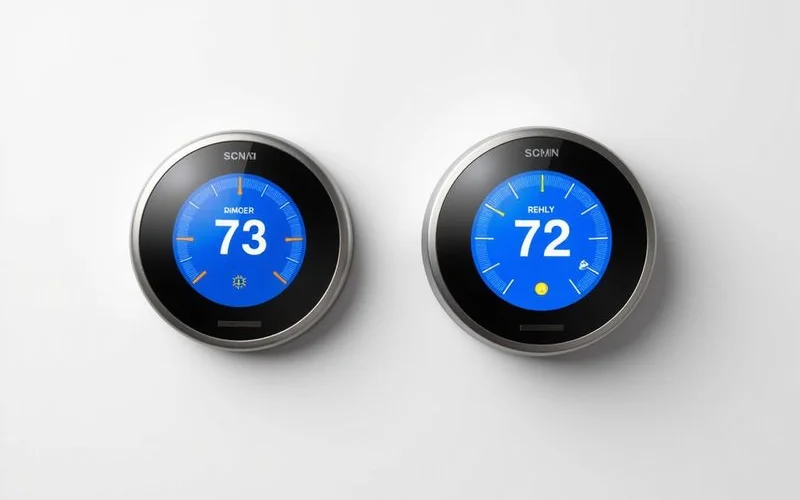
The smart thermostat market has several strong contenders. Here is how the most popular options compare for Northern Virginia homes.
Google Nest Learning Thermostat The Nest was the pioneer of smart thermostats and remains one of the best options. It excels at learning your habits automatically, has a clean and intuitive interface, and integrates well with Google Home ecosystems. It requires a common wire (C-wire) for most installations, though some older Virginia homes may not have this wire in their thermostat wiring.
Ecobee Smart Thermostat Ecobee’s standout feature is its included room sensors. You can place wireless sensors in different rooms to ensure the temperature is comfortable where you actually spend time, not just where the thermostat happens to be mounted. For multi-level Manassas homes where temperature varies significantly between floors, this feature is particularly valuable.
Honeywell Home T9 Honeywell has decades of HVAC experience, and their smart thermostats reflect that expertise. The T9 offers room sensors similar to Ecobee and integrates well with most HVAC systems, including more complex setups with dual fuel or multi-stage equipment like heat pump systems.
Compatibility Considerations
Before purchasing a smart thermostat, verify compatibility with your existing HVAC system. Most smart thermostats work with standard single-stage and multi-stage central heating and cooling systems. However, some older or specialized systems may not be compatible.
The C-Wire Question Many smart thermostats require a common wire (C-wire) for power. If your existing thermostat wiring does not include a C-wire, you have several options. Some thermostats include a power adapter that can be installed at the furnace. Others can draw enough power from the existing wires without a C-wire, though this can sometimes cause compatibility issues.
If you are unsure about your wiring or compatibility, our technicians at HVAC of Virginia can assess your system and recommend the best thermostat for your specific setup.
Installation Tips
Many homeowners can install a smart thermostat themselves in 30 minutes or less. Here are the key steps:
Turn off power to your HVAC system at the circuit breaker before beginning. Take a photo of your existing thermostat wiring before disconnecting anything. This photo is invaluable if you need to troubleshoot or revert. Label each wire with the terminal letter it connects to. Remove the old thermostat mounting plate and install the new one. Connect wires to the corresponding terminals on the new thermostat. Attach the thermostat to the mounting plate and restore power.
Follow the manufacturer’s setup app to connect the thermostat to your home WiFi network and configure your preferences.

Maximizing Savings with Your Smart Thermostat
Simply installing a smart thermostat helps, but using it correctly maximizes your savings.
Let the Learning Phase Complete For thermostats with learning algorithms, resist the urge to constantly override the schedule during the first two weeks. The thermostat needs time to learn your patterns. Manual overrides during this period can confuse the learning process.
Use the Eco Mode Most smart thermostats have an eco or away mode that sets the temperature to an energy-saving range when you are not home. Make sure this feature is enabled and that the eco temperatures are set appropriately. We recommend 78 to 82 degrees for cooling eco mode and 60 to 65 degrees for heating eco mode.
Review Energy Reports Smart thermostats provide monthly energy reports showing your usage patterns, how your consumption compares to similar homes, and tips for further savings. Review these reports regularly and act on the recommendations.
Integrate with Other Smart Home Devices If you have smart ceiling fans, smart blinds, or other connected devices, set up automations that complement your thermostat. For example, closing motorized blinds on the sunny side of your home during summer afternoons reduces cooling demand.
Real Savings for Virginia Homeowners
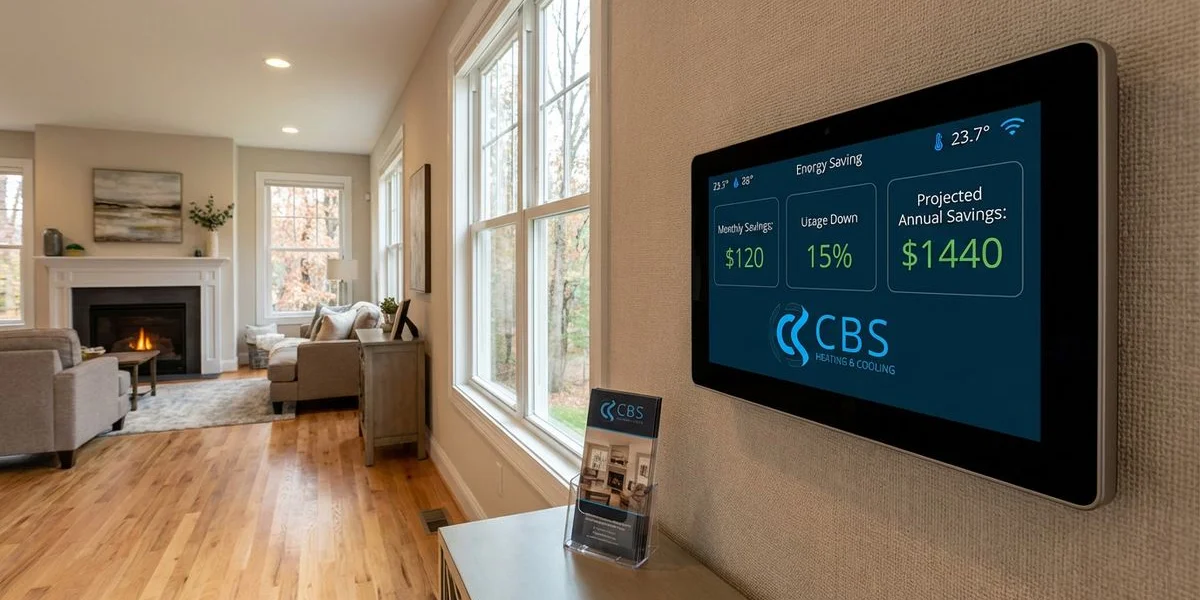
How much can a Manassas homeowner realistically save with a smart thermostat? Based on our experience with local installations and EPA estimates, most Northern Virginia homeowners save 10 to 15 percent on heating and cooling costs. For a home spending $2,400 per year on HVAC energy, that represents $240 to $360 in annual savings.
At a purchase price of $150 to $250, most smart thermostats pay for themselves within the first year, making them one of the best home improvement investments available.
Professional Installation Available
If you prefer professional installation, or if your wiring situation is complex, HVAC of Virginia can install and configure your smart thermostat as part of a maintenance visit or as a standalone service. Call us at (703) 555-0123 to schedule an appointment. We serve Manassas, Centreville, Gainesville, Woodbridge, and all of Northern Virginia.
Need HVAC Help?
Our expert technicians are ready to help with any heating or cooling issue.
Related Articles
When to Replace vs. Repair Your HVAC System
Not sure whether to repair or replace your aging HVAC system? Use this decision framework from HVAC of Virginia to make the right choice for your home.
HVAC Energy Efficiency Ratings Explained: SEER, AFUE, HSPF
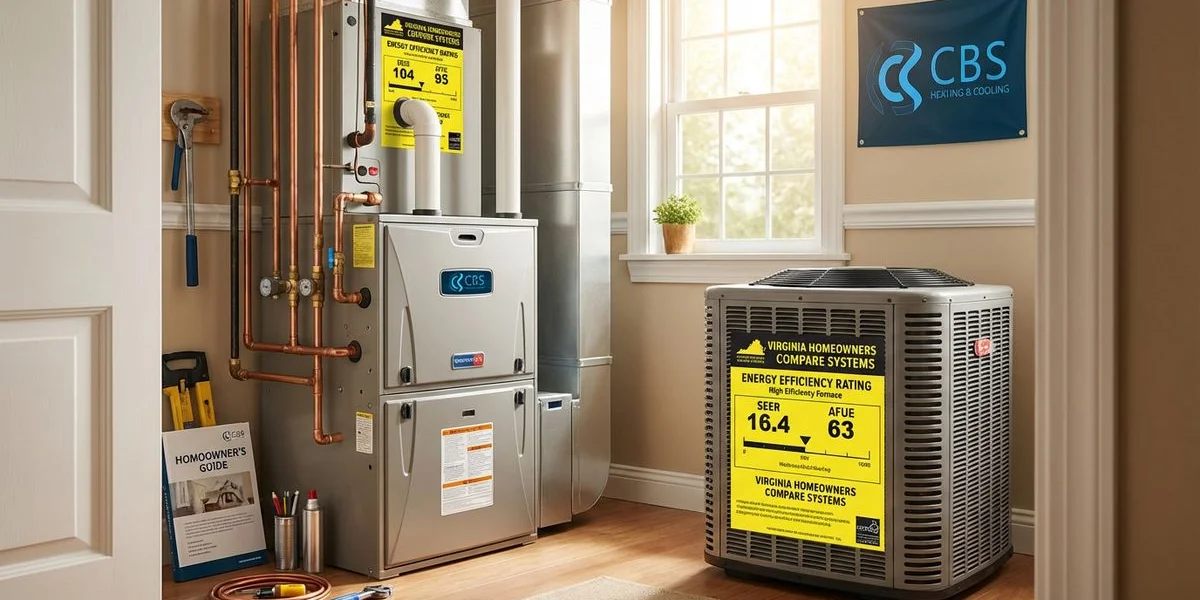
Confused by HVAC efficiency ratings? This guide breaks down SEER, AFUE, HSPF, and other ratings so Virginia homeowners can make informed purchasing decisions.
10 Ways to Lower Your Energy Bills with HVAC Efficiency
Reduce your heating and cooling costs with these 10 proven HVAC efficiency tips. Northern Virginia homeowners can save hundreds per year with simple changes.