When to Replace vs. Repair Your HVAC System
Not sure whether to repair or replace your aging HVAC system? Use this decision framework from HVAC of Virginia to make the right choice for your home.
The Repair or Replace Dilemma
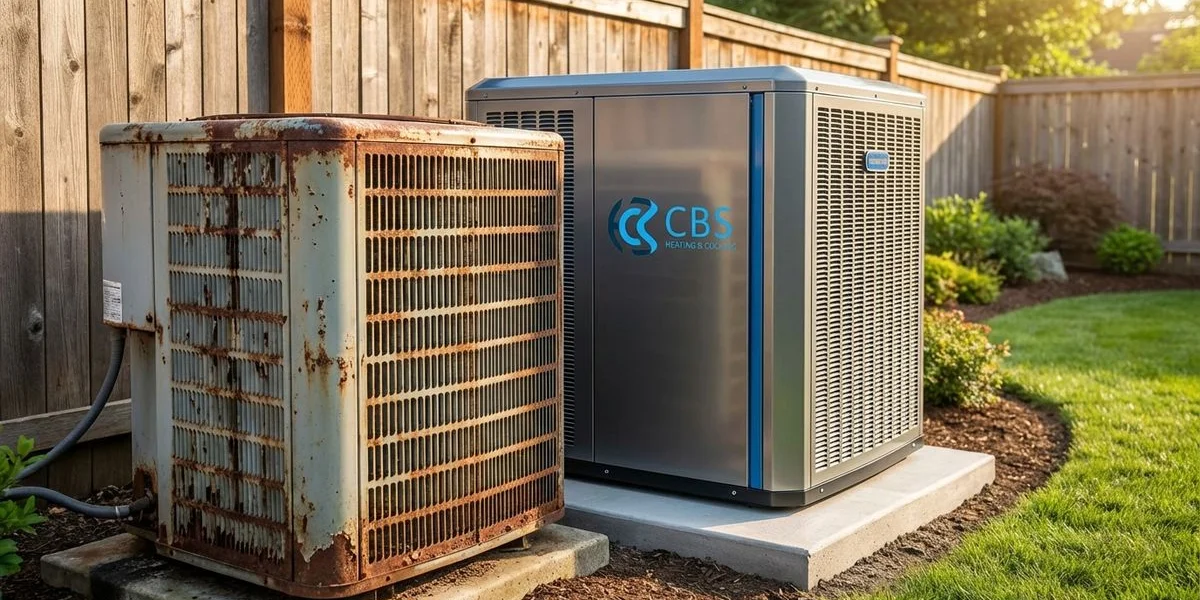
Every HVAC system eventually reaches a point where repairs start becoming more frequent and more expensive. The question is: when does it make more financial sense to replace the entire system rather than continuing to fix the old one?
This is one of the most common questions we hear at HVAC of Virginia, and there is no one-size-fits-all answer. But there is a logical framework you can use to make an informed decision. Here is how to evaluate your situation.
The Age Factor
The age of your system is the first consideration. Here are the typical lifespans for common HVAC equipment:
- Central air conditioners: 15 to 20 years
- Gas furnaces: 20 to 25 years
- Heat pumps: 15 to 20 years
- Ductless mini-splits: 15 to 20 years
If your system is within the first half of its expected lifespan and the repair is not major, repairing is almost always the right choice. If you are in the last quarter of the expected lifespan, replacement becomes a more attractive option with each passing year.
Many homes in the Manassas area were built or had their HVAC systems installed in the early 2000s, which means those systems are now approaching or past the 20-year mark. If this describes your home, it is time to start thinking seriously about replacement, even if the current system is still functioning.
The 50 Percent Rule
A widely used guideline in the HVAC industry is the 50 percent rule: if a repair costs more than 50 percent of the value of a new system, replace rather than repair. For example, if a new system would cost $8,000 installed and the proposed repair is $4,500, replacement is the smarter financial choice.
This rule applies particularly well to major component failures. A compressor replacement, for instance, can cost $2,000 to $4,000 including labor. For a system that is already 12 or 15 years old, investing that much in a component that may only last another few years before something else fails rarely makes sense.
The Frequency of Repairs
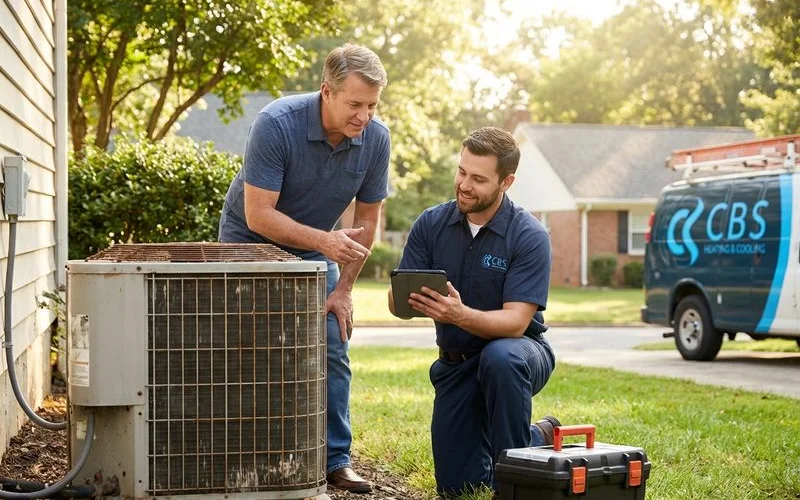
Consider how often you have been calling for repairs over the past few years. A single repair on an otherwise reliable system does not warrant replacement. But if you have had two or three repairs in the past 18 months, or if your technician keeps finding additional issues during each visit, the system is telling you something.
Track your repair costs over time. If annual repair expenses are approaching or exceeding the equivalent monthly payment on a new system, you are spending replacement money on a system that will continue to deteriorate.
Energy Efficiency Gains
The efficiency improvements in HVAC technology over the past 15 to 20 years have been dramatic. If your current system was installed before 2010, it likely has a SEER rating of 10 to 13. Modern systems start at 14.3 SEER2 (roughly equivalent to 15 SEER) and top models exceed 20 SEER2.
For a typical Northern Virginia home, upgrading from a 10 SEER system to an 18 SEER2 system can reduce cooling energy costs by 40 to 45 percent. That translates to hundreds of dollars per year in savings, which offsets the cost of the new system over time.
Similarly, upgrading from an 80 percent AFUE furnace to a 96 percent model means you are getting 20 percent more heat from every dollar of natural gas you burn. Over a Virginia heating season, this can save $200 to $400 annually.
Refrigerant Considerations
If your air conditioner or heat pump uses R-22 refrigerant (commonly known as Freon), this is a strong argument for replacement. R-22 was phased out of production in the United States in 2020 due to its ozone-depleting properties. The remaining supply is limited and increasingly expensive.
If your R-22 system develops a refrigerant leak, recharging it can cost $100 to $200 per pound, compared to $15 to $30 per pound for the R-410A refrigerant used in modern systems. A system that needs several pounds of R-22 can easily cost $500 to $1,000 just for the refrigerant, not counting the cost of finding and repairing the leak.
Comfort and Reliability
Beyond pure cost analysis, consider the comfort and reliability aspects. Older systems often struggle to maintain consistent temperatures, have noisy operation, and provide poor humidity control. Modern systems with variable-speed compressors and multi-stage operation deliver dramatically better comfort.
If you find yourself constantly adjusting the thermostat, dealing with hot and cold spots in different rooms, or living with excessive humidity despite running the AC, a new system can transform your home comfort experience.
Available Incentives Tip the Scale
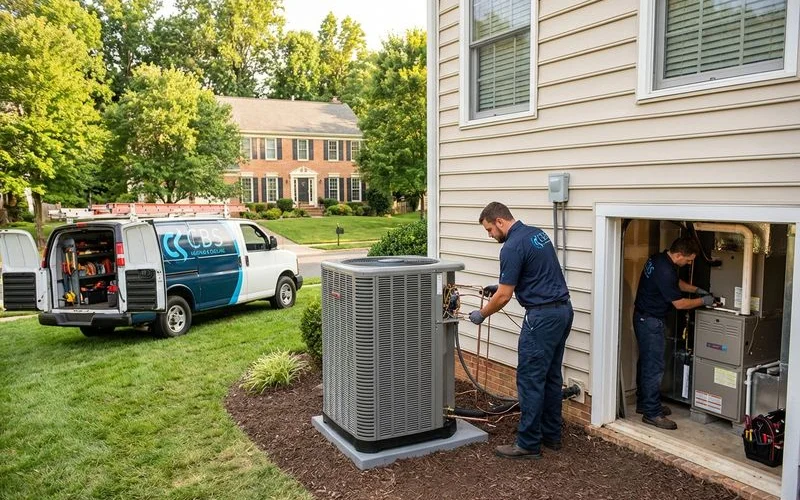
Current federal tax credits and utility rebates make this an particularly good time to invest in a new high-efficiency HVAC installation. The Inflation Reduction Act provides tax credits of up to $2,000 for qualifying heat pump installations and up to $600 for qualifying furnace installations. Some state and local incentives may also be available.
These incentives can reduce the effective cost of a new system by 15 to 25 percent, significantly improving the payback period and making replacement more financially attractive compared to continued repairs.
Making Your Decision: A Checklist
Consider replacement if three or more of these apply to your situation:
- Your system is more than 15 years old
- You have spent more than $500 on repairs in the past year
- Your energy bills have been increasing without explanation
- Your system uses R-22 refrigerant
- You experience inconsistent temperatures or poor humidity control
- A major component like the compressor or heat exchanger needs replacement
- Your system makes unusual noises or runs constantly
If only one or two apply, a repair may still be the better choice, especially if the repair is relatively minor and your system has years of life remaining.
Get an Honest Assessment
At HVAC of Virginia, we never push replacement when a repair makes more sense. Our technicians provide transparent evaluations and present all your options with honest cost comparisons. Contact us at (703) 555-0123 for a professional assessment of your system. We serve homeowners throughout Manassas, Centreville, Gainesville, Woodbridge, and all of Northern Virginia.
Need HVAC Help?
Our expert technicians are ready to help with any heating or cooling issue.
Related Articles
HVAC Energy Efficiency Ratings Explained: SEER, AFUE, HSPF
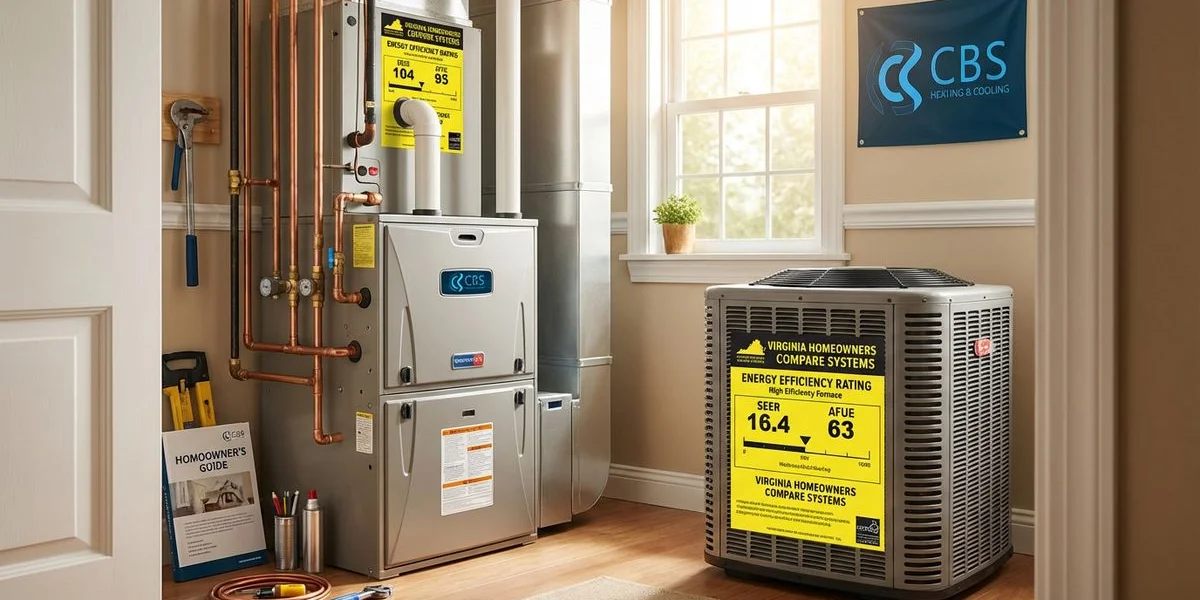
Confused by HVAC efficiency ratings? This guide breaks down SEER, AFUE, HSPF, and other ratings so Virginia homeowners can make informed purchasing decisions.
Smart Thermostat Guide: Save Money on Heating and Cooling
Everything you need to know about smart thermostats for your Virginia home. Compare features, learn installation tips, and maximize your energy savings.
10 Ways to Lower Your Energy Bills with HVAC Efficiency
Reduce your heating and cooling costs with these 10 proven HVAC efficiency tips. Northern Virginia homeowners can save hundreds per year with simple changes.